Professor of Fine Arts
Jan Nuckowski
Specializing in contemporary arts and visual communication with over three decades of academic excellence.
Academic Background
Professorship based on academic achievements. Reviewers: Prof. Michał Jędrzejewski, Prof. Bogumiła Jung, Prof. Jacek Popek, Prof. Władysław Pluta. I received the document confirming the appointment from President Lech Kaczyński on January 13, 2009.
Habilitation On the definition and beginnings of visual communication. Reviewers: Prof. Marian Nowiński, Prof. Ryszard Otręba, Prof. Stanisław Wieczorek.
Academy of Fine Arts in Krakow, 2001
PhD Visual Communication Design - Exemplification. The thesis supervisor was Prof. Ryszard Otręba. The reviewers were Prof. Roman Banaszewski and Prof. Leszek Hołdanowicz.
Academy of Fine Arts, 1982
Dissertation on the intersection of visual communication and contemporary painting
Master's degree Project of identifying chemical plant protection products for informational and warning purposes. The thesis supervisor was Associate Professor Ryszard Otręba.
Academy of Fine Arts in Krakow, 1972
Specialization in painting and mixed techniques
Supervisor of doctoral theses
Scientific supervision
- Barbara Widłak, Designing land coats of arms in the contemporary era - 2007
Andrzej Klisz, Problems of designing public space on the example of a public transport stop design - 2011
Justyna Kucharczyk, *Development of visual communication for the Katowice-Pyrzowice airport - 2011
Piotr Barszczowski, Cross – a pre-sign - 2012
Anna Myczkowska, Basics of visual information design - 2012
Monika Wojtaszek-Dziadusz, Selected aspects of packaging graphic design – script design - 2012
Marek Osman, Design of selected special-purpose state printed materials - 2013
Jerzy Gruszczyński, Design of selected basic elements of a road sign system - 2014
Kamil Kamysz, Interactive book for Children aged 6-7 - 2015
Agnieszka Andruszkiewicz, Selected aspects of paper packaging construction – script design - 2016
Magdalena Koziak, On bookbinding presses constituting the inventory of the Book Design Studio of the Faculty of Graphic Arts at the Jan Matejko Academy of Fine Arts in Krakow - 2017
Seweryn Puchała, Publication project on the topic: The function of photography in visual communication - 2021
Designed Life
Jan Kazimierz, son of Marta and Jerzy Nuckowski, was born on March 11, 1946, in Katowice. In 1949, the family moved to Krakow to live with Ignacy Nuckowski, my grandfather, a graduate of the Jagiellonian University, a doctor of law with the rank of major, a military prosecutor, and after the war, a lawyer. I received my education there, starting at Primary School No. 7. In 1964, I graduated from the King Jan III Sobieski Secondary School No. 2 in Krakow. I began my studies at the Faculty of Industrial Design at the Academy of Fine Arts in Krakow in 1966. I defended my master's degree in 1972 at the Department of Visual Communication under the supervision of the invaluable associate professor Ryszard Otręba. For the first few years after graduation, I worked as a freelancer in the field of visual communication design, but also industrial design. In 1978, I received an offer of a contract position at my alma mater, the Department of Visual Communication. From the 1981-1982 academic year, this position was replaced by employment as a research and teaching assistant at the Jan Matejko Academy of Fine Arts in Krakow. Thus began my academic career. After obtaining subsequent degrees and academic titles, I held positions at the Academy: from 2002 to 2016 as Head of the Department of Visual Communication, from 2005 to 2012 as Dean of the Faculty of Industrial Design. For 10 years, I was a member of the Academy Senate. I also simultaneously worked as a research and teaching assistant at the B. Markowski Higher School of Business in Kielce, majoring in Design, and from 2012 to 2022 at the Academy of Applied Sciences in Tarnów, Faculty of Art, formerly the Tarnów State Higher Vocational School. Over the years, I have supervised over 100 master's and bachelor's theses, and 12 doctoral dissertations. I have also reviewed 8 doctoral theses, 32 postdoctoral theses, and 15 professorial theses. In 2005, I was appointed an expert by the Ministry of National Education and Sport to develop teaching standards for the design program.
From 1981 to 1983, I was active on behalf of the Committee for Assistance to Political Prisoners and Internees at the Metropolitan Curia in Krakow.
Academic Societies
- verified Member of the Ergonomics Commission of the Polish Academy of Sciences Branch in Krakow
Early Archives
childhood years
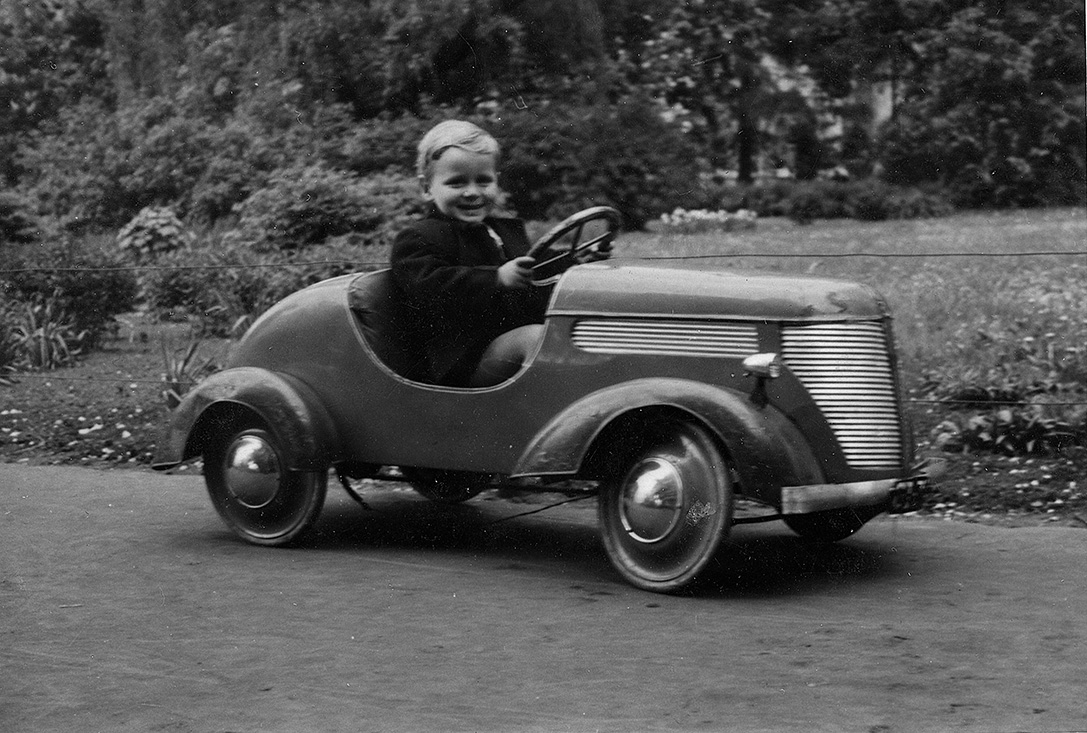
my first car, 1952
A photo from the Krakow Planty Park, near the pond
with a fountain that was illuminated in the evenings,
and the color changed cyclically according to some algorithm. Wow! A place for walks that took place under my mother's supervision.
It was also a time of gradual learning
about the city's urban layout and its
most magnificent monuments.
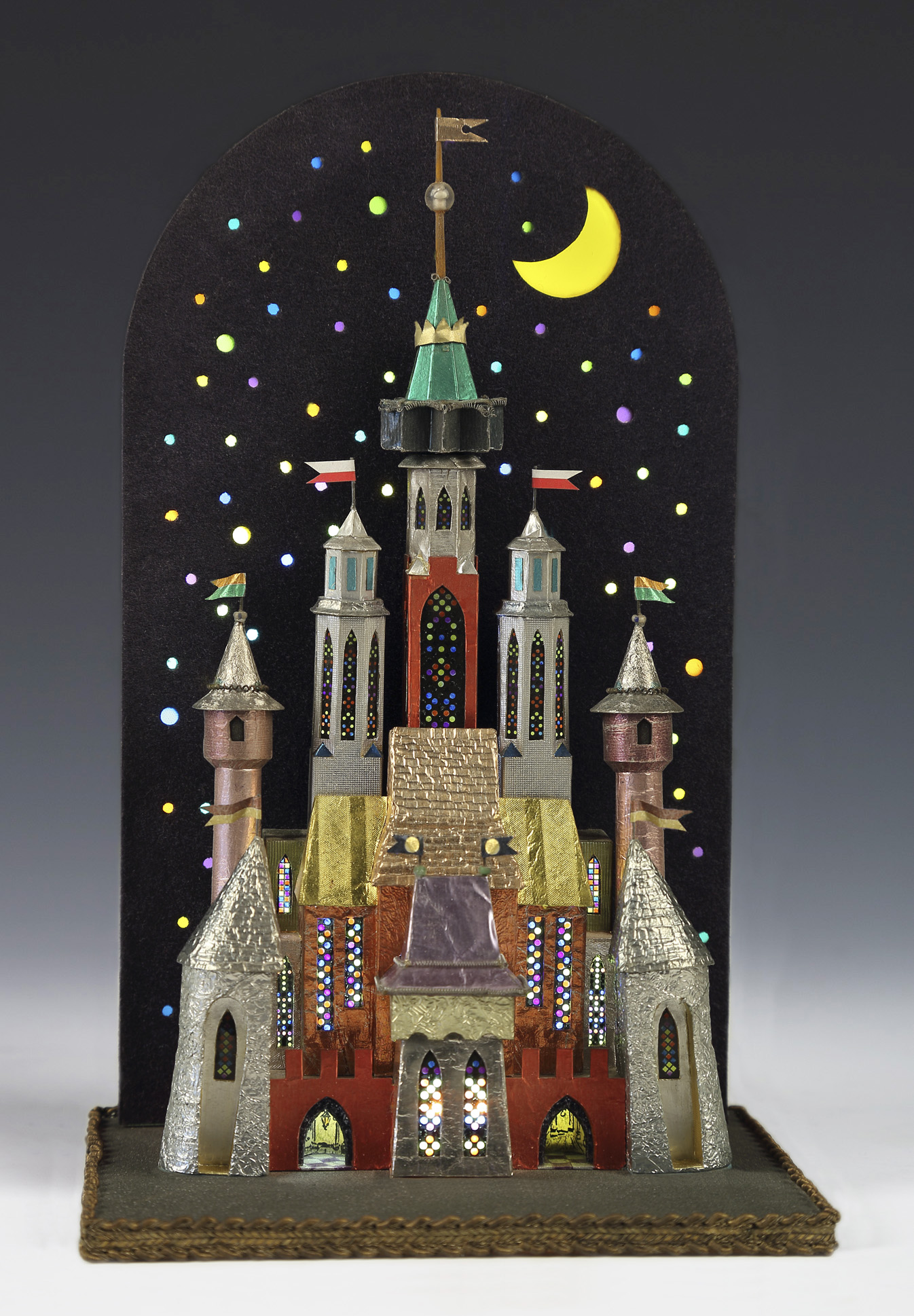
Krakow nativity scene, 1967
Krakow nativity scene, 1967
I envy those who remember their childhood in detail and can recount it vividly. I'm not blessed with that. Of course, I remember some things, but it's relatively little, and it's chaotic, to boot. I have absolutely no idea what or why determined which moments I remember, why these and not others in my already long life. I think it was in fourth or fifth grade that I started declaring that I would one day be an architect. Where did this come from? No one in my family was an architect or had any connection with one. Perhaps the fact that my father made a Krakow nativity scene every year, which he exhibited at the annual competition organized by the Krakow Historical Museum, had an influence. I myself became involved in this otherwise wonderful tradition of Krakow culture. I made nativity scenes for years, until my second year of university. It's embarrassing to admit, but at the time, it seemed inappropriate for me, a future artist-creator, to engage in such a frivolous activity. So, so embarrassing. I regret that I was unable to pass this wonderful tradition on to my children and grandchildren. I had some surprising success in this endeavor. The last klezmer of Galicia, Leopold Kozłowski, pianist, composer, and conductor of the Song and Dance Ensemble of the Kraków Military District, who made an extraordinary contribution to Polish culture, but especially Jewish culture, bought my nativity scene on one of his trips to China, which he gave as a gift to leader Mao Zedong.
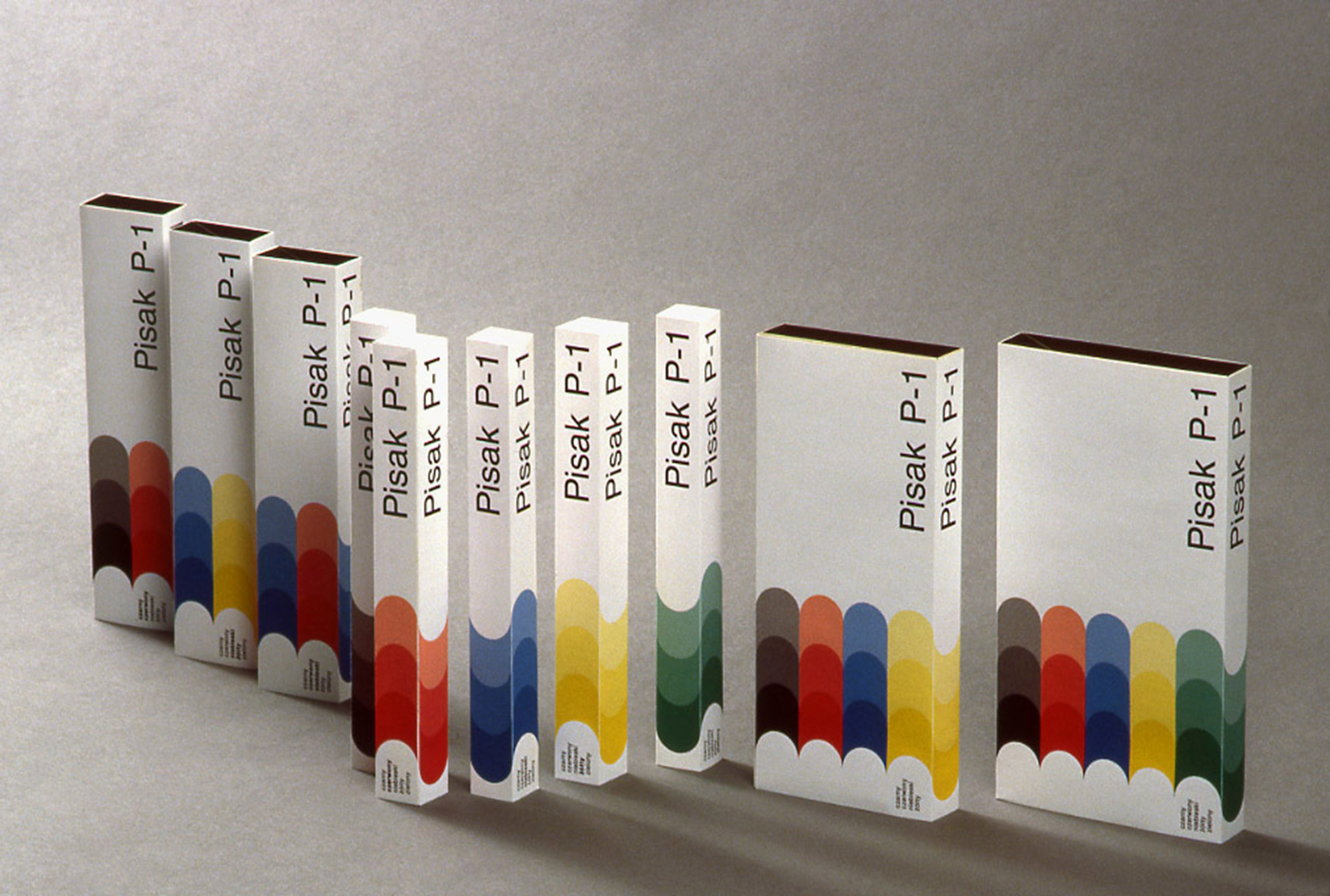
packaging graphics
packaging graphic, 1979
Designing packaging graphics has always given me great satisfaction. It wasn't a stress-free activity. The times we've just passed have been a challenge for all of us. Poor technologies, materials, political conditions, and so on. Incredibly, these last factors played a significant role even in the field of graphic design. I completed my first project in this field, for a company, not as a college assignment, in 1969, while still a student.
I don't remember the subject. It was a commission from Miraculum, one of the cosmetics giants at the time. It didn't go smoothly. The woman responsible for collaboration with artists at Miraculum gave me a level of proofreading I'd never experienced from a professor at the academy. My first instinct was to take offense and withdraw from the assignment. How can this be? I'm about to graduate, I'll be a certified designer, and my work has flaws! However, the prospect of earning money for my student budget was such a strong argument that, after overcoming the insult and implementing the desired changes to the design, I gradually achieved consensus and the adoption of the revised version. Thus began my over twenty-year collaboration with Miraculum. That was until a conflict arose, and another revision, and the rejection of my design, though the designer had already achieved some achievements, by a factory official. I never forgave that, and with a hidden pain, I ended the collaboration.
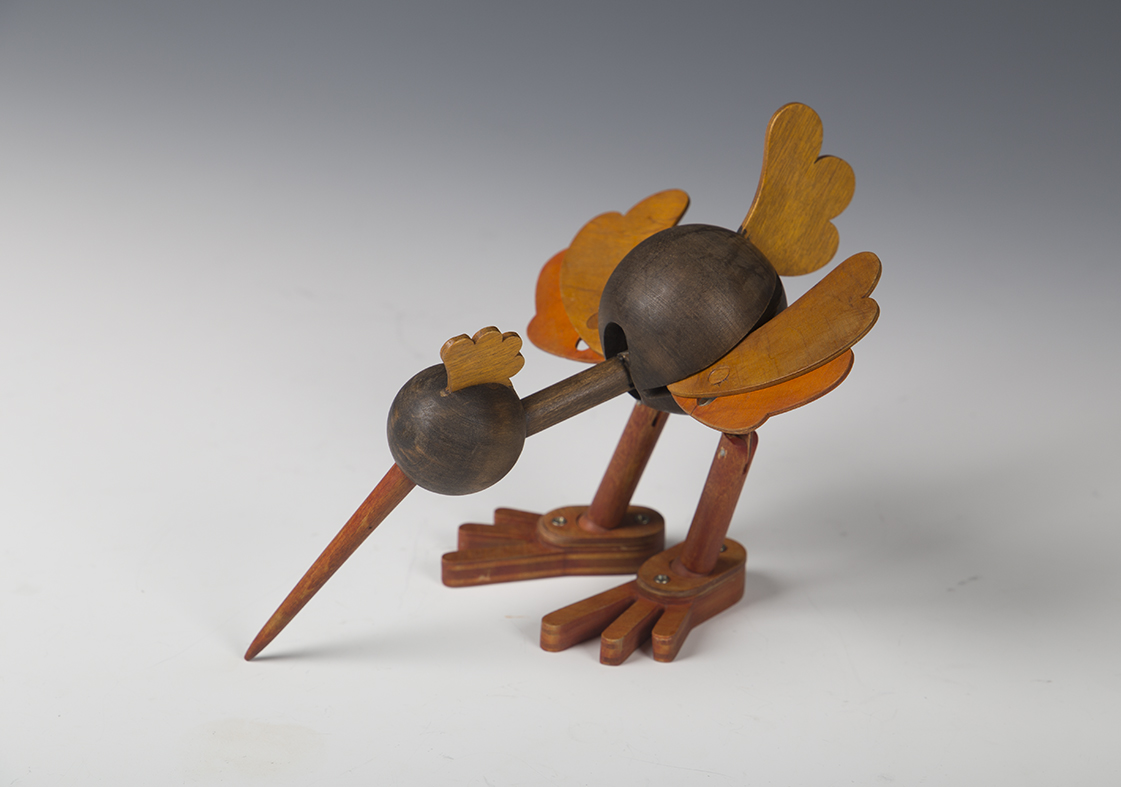
Pinocchio Bird
Pinocchio Bird
In bygone times, the widespread shortage of everything was not only acute but also, in some cases, bizarre. Wanting to brighten up a child's life, you'd buy, for example, a chocolate-like product. I'm not making this up, making it up, or exaggerating. You'd buy something that reminded older people of a chocolate bar, and if not for the taste, it was far from the original. Furthermore, for those consumers who are particularly sensitive to the appearance of an edible product, the slight white coating of this oddity raised doubts. Not to mention the taste. Besides, needless to say, many artifacts around us could easily bear the suffix similar. There were products that resembled clothing, furniture, and so on. Unfortunately, we also had life-like fates in many respects. This was also the case with toys. Hence, one example: a toy I made for Maja and Mateusz, my two children. I am still convinced that they do not deserve the mentioned suffix!
designer's workshop
visual communication designer workshop
The title should be supplemented with the words "workshops, methods, and procedures of those years."
The project is still being developed according to the familiar pattern, which I'm reminding you of in its seven key points.
Design Process - Pattern
» Defining the Design Problem
» Data Collection
» Analysis
» Synthesis
» Design Concept
» Documentation Preparation
» Documentation Submission
All of these require our full intellectual commitment. This, of course, also applies to the last two points of this pattern, although they may seem like purely technical stages. Personally, I believe that these are the decisive factors in determining the project's success and whether the concept will be understood and accepted.
At first glance, it might seem that nothing has changed in this regard over the last 50-60 years. Only at first glance. However, it has changed, and significantly, especially when we consider the last two stages of design. Simply put, visualizing design thinking involves creating shapes using colors and using text with appropriate lettering. This is, of course, a gross oversimplification! For this to come true, a specialized workshop is necessary.
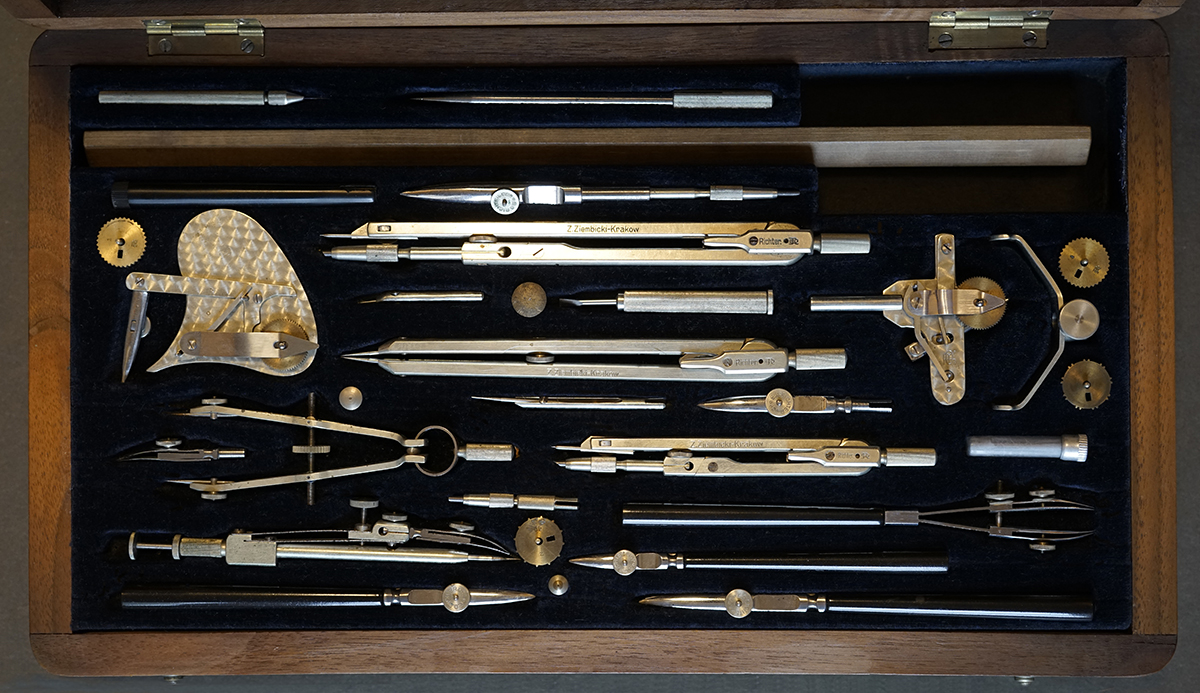
Originally, this word meant a craftsman's workplace. Over time, the interpretation broadened to include skills, tools, and materials. You know perfectly well what our workshop looks like today.
Currently, thanks to computers, various programs, printers, and so on, it's possible to complete several versions of a design in a relatively short time. Of course, this depends on the complexity of the design problem. Comparing two eras, the past and the present, is not easy. The results may seem similar, but the speed of completing several concepts, which can be compared for verification, shortened the time immeasurably. In my opinion, this is an invaluable benefit. I have the opportunity to see my concept come to life, with all its qualities. In my early professional years, these were often mere semblances of what I intended to achieve. As a curiosity, do you know what color coding is?