
Academic teacher, designer and artist
Professor Jan Nuckowski
I specialize in visual communication design and graphic design. I am currently a professor emeritus at the Academy of Fine Arts in Krakow.
Achievements
achievements
My students and what I have tried to teach them occupy a prominent place in my work. In addition to this area, I also work on design and design-research projects, primarily in the field of visual communication.
Here is a list of selected works:
- study of visual information in the newly designed station complex in the area of the Krakow City Communication Center – the PKP, PKS, LOT Polish Airlines, and public transport stations, ensemble (1973),
- identification design for the Bochnia Salt Mine in Bochnia (1981),
- concept of comprehensive street furnishings for the Krakow City Art Office (1982),
- design and implementation of the silver medal "Join the Other's Burdens" – presented to St. John Paul II during his pilgrimage (1983),
- concept of the functional form of anthropometric data – "Atlas of Anthropometric Characteristics of Polish Children and Youth" for the Institute of Industrial Design in Warsaw, ensemble. (1983),
- the identity design for the John Paul II Krakow Specialist Hospital in Krakow (1989),
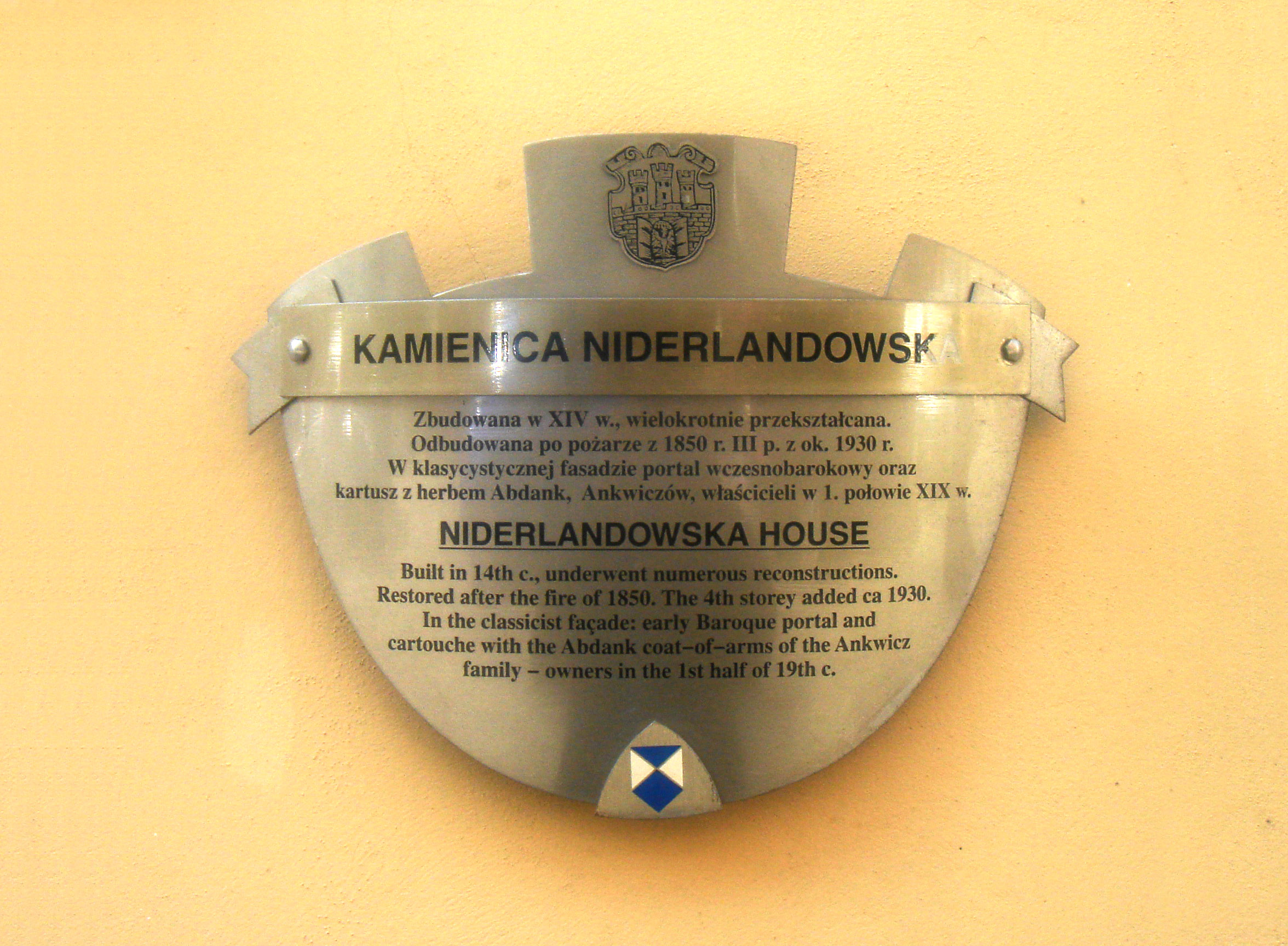
- a study of the artistic concept of information boards for Krakow's historic buildings for the Krakow City Hall (1994),
- the logo design and statuette concept for the John Paul II International Award of the Małopolska Voivodeship Veritatis Splendor – awarded for special contributions to promoting dialogue between cultures in the social, cultural, and interreligious dimensions – the "Małopolska Nobel" (2016),
- the logo design for Totus Tus – the celebration of the 100th anniversary of the birth of Saint John Paul II (2020).
I have also created over 200 original posters. They hold a special place in my work, even though they were not commissioned. I feel like no one is waiting for them, that they are "unwanted," and even seem to be a nuisance. I have presented some of them in over 100 group exhibitions in Poland and abroad. I have self-published two catalogs of my posters. The first in 2018, with the surprisingly title posters, and the second in 2025, Interventions.
Students
I've been fortunate in having ambitious and hard-working students. It's immensely satisfying to see them surpass me, their teacher, and achieve so many successes. I know it's awkward to compile a list of your students' names. How can you value their undeniable value or success, but I want to at least mention some. The order doesn't matter; I'm listing them as they come to mind at the moment: Anna Myczkowska-Szczerska, Seweryn Puchała, Ewa Pawluczuk, Joanna Sarzyńska-Putowska, Monika Wojtaszek-Dziadusz, Barbara Widłak, Andrzej Barszczowski, Kamil Kamysz, Adelina Arendarska, Magdalena Koziak, and many others whom I can't recall at the moment, yet paradoxically hold their place in this imperfect memory.
Awards
Awards
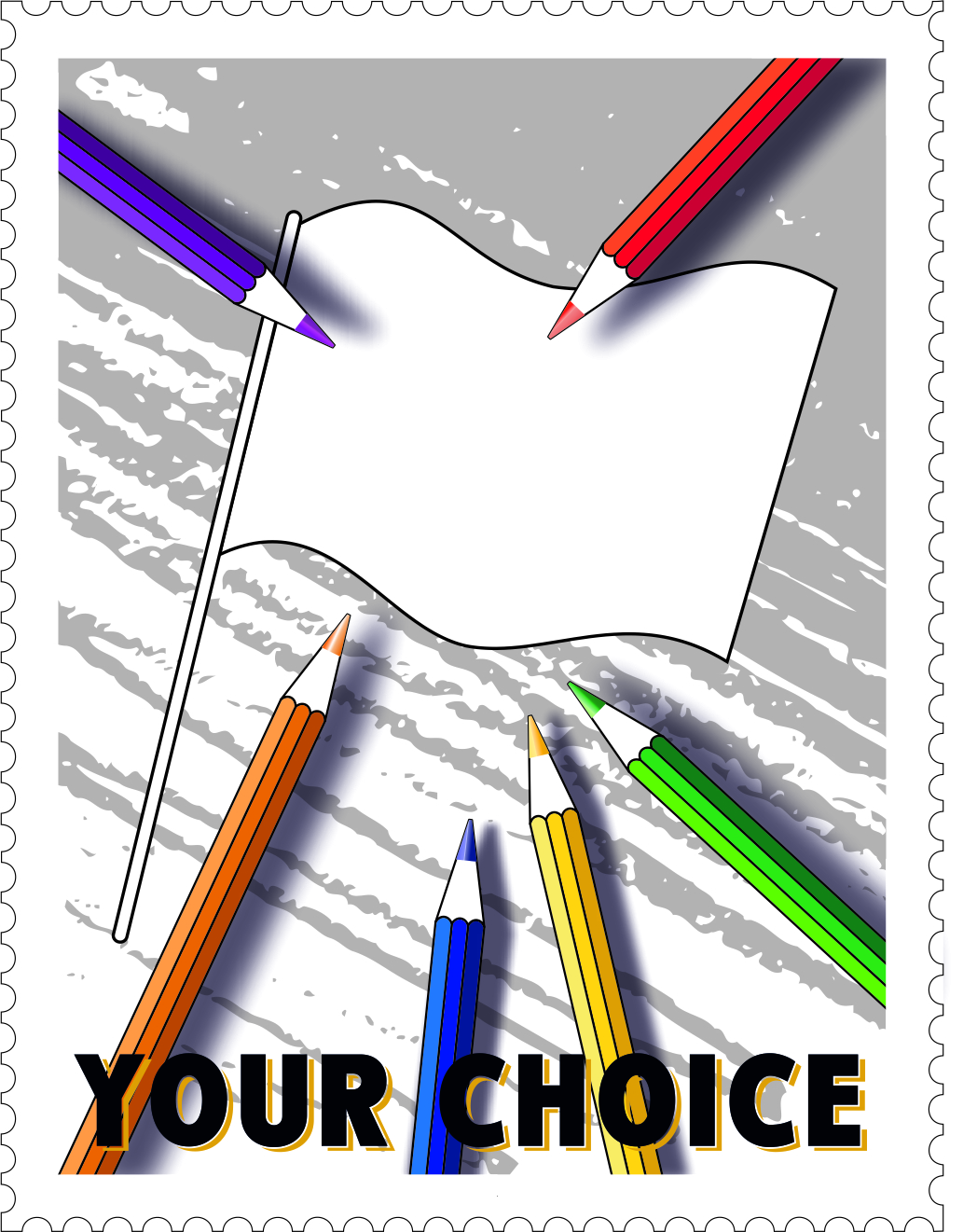
I don't have many awards, but for many reasons they are worth mentioning. There's one that brought me particular joy. It was a postage stamp competition organized by the Ministry of Posts and Telecommunications in Japan. I received word that my entry had won fourth place. I thought, "Great, but it's a shame it wasn't higher." The next message brought the news that over 27,000 entries had been submitted! Insane! How, from this unimaginable mass, my design was selected and awarded fourth place. To this day, even though it was 1989, I can't hide my joy. Here is the list of awards:
- Rector's Awards: 2nd Class - 1990, 1997, 1st Class - 2012,
1st Class Award of the Minister of Culture and National Heritage - ..., - 1st Prize in the Grand Prix Poster Competition in Krakow - (1976)
- 4th Prize in the Third Postage Stamp Design Contest, Japan - (1981)
- 1st Prize in the competition for the logo of the Symposium and Conference on Security and Cooperation on the Cultural Heritage of Europe - (1982)
- 1st Prize in the competition for the logo of the John Paul II Hospital in Krakow - (1991)
- 3rd Prize at the International Political Poster Triennial in Mons - (2016).
Honors
Decorations
awards
I never intended to, and never have, entered into any political alliances, and at no point in my life have I availed myself of any privileges for such merits. I joined the Solidarity movement at its most elevated moment. However, as soon as the leader began to lose sight (I don't know if that's the right phrase here) of the proportions of his relationships with well-wishers, I asked to be removed from the membership list. My circle didn't understand my decision. Their eyes were opened much later after my arrival.
I owe what I received in this category to my colleagues from the Academy and their recommendations:
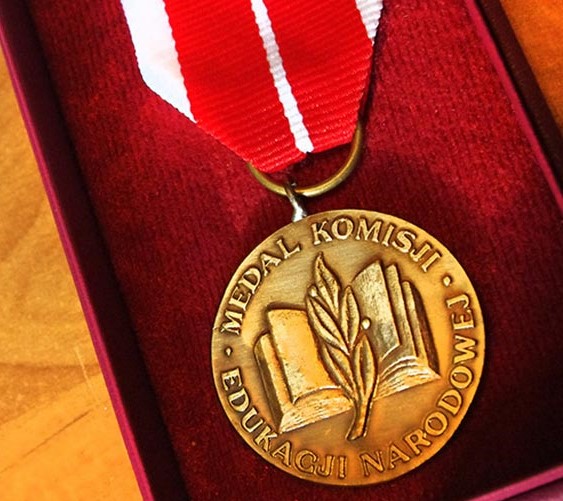
- Medal of the National Education Commission - 2005,
- Gold Cross of Merit - 2012,
- Knight's Cross of the Order of Polonia Restituta - 2015,
- Silver Medal for Merit to Culture - Gloria Artis - 2016.
Academic Inquiry
Rational methods of designing visual communication I
ERGONOMICS An International Journal of Ergonomics Human Factor Vol. 27 No. 1 January-March 2005
Visual testing holds a special place in my research, as a method for multi-faceted verification of visual communication elements. This occurs from the moment of conception to the implementation of a specific project.
They are a consequence of the search for and use of rational design methods. In this respect, they fit into the broadly defined field of ergonomics – the ergonomics of vision.
In professional practice, there are cases when the gravity of the problems to be solved presents visual communication designers with challenges that require special approaches. I'm referring to design problems whose solutions can impact the safety, health, or even life of the recipients—users of visual communication. Road signs are a prime example.
Rational Methods of Designing Visual Communication II
Rational Methods of Designing Visual Communication II
Another example: imagine poorly designed signage for the technological installations of a factory or a manufacturer of pharmaceuticals, whose main components are hazardous chemical reagents. Poor, illegible instructions, labeled manipulators, and so on, all impact employee safety. Here, the designer's intuition is insufficient. Methods such as those advocated by the Department of Visual Communication at the Faculty of Industrial Design are essential. I'm referring to procedures based on rational assumptions that allow for adapting the visual environment to the user's perceptual abilities. A verification stage of design decisions is also essential, eliminating errors that far exceed average requirements.
Another situation that requires special considerations is when the project being developed—a facility—is addressed to a large number of recipients who are also under emotional stress. A train station or airport, for example, or even better, a hospital or any other healthcare facility. Misunderstandings and mistakes in such circumstances can prove costly, if not dramatic. An equally specific rule of conduct may be required in circumstances where the correctness of the design determines the financial benefits or losses associated with the launch of a flawed product, such as poor, illegible, or inadequate packaging graphics.
These are just a few examples of circumstances in which a designer cannot rely solely on their intuition. Responsibility requires verifying their decisions based on methods and procedures that allow for the verification of design concepts in a way that leaves no doubt.
Rational methods of designing visual communication III
The discussion so far has focused on describing research techniques that support objective design decisions, enabling the adaptation of the physical characteristics of a visual message (or its components) to the requirements of a specific object.
The research techniques presented here have diverse origins. Most stem from experimental and engineering psychology, but also include those developed by market research institutions, and finally, those developed by the Department of Visual Communication at the Faculty of Industrial Design at the Academy of Fine Arts in Krakow.
The research techniques mentioned above can be simplified into:
- psychological tests
- visual tests, sometimes referred to as psychotechnical tests (in English-language literature, these tests are referred to as physiological tests).
The first group of tests focuses on examining people's preferences, views, and opinions related to the material being tested.
The second group of studies is related to the relationship between the physical characteristics of the objects being tested,
which emit stimuli that stimulate specific physiological activity – visual perception. Visual tests allow not only for determining the absence or presence of a specific stimulus, but also for measuring its strength, intensity, and other characteristics. These tests primarily measure the impact of specific elements of visual messages. These tests do not delve into the psychology or preferences of the recipient. My subsequent discussion pertains to this type of research.
Most of the presented tests involve creating situations or circumstances in laboratory settings that could occur in real life. It goes without saying that visual messages are perceived from varying distances, that their perception may be accompanied by fog, changing lighting (natural or artificial), or that their position relative to the observer may not always be optimal. Each of these circumstances is unfavorable (and may interfere with) the perception of the message, and in fact, becomes a moment of critical verification. Creators of these messages must be aware that fate will not always favor their messages. Therefore, it is necessary to verify in advance the degree to which the designed messages are resistant to such contingencies. These techniques also allow for verification of the conformance of the identification and readability of entire messages and their elements with the assumed, designed, and desired readability hierarchy.
And another note: Most devices used in visual tests are equipped with appropriate scales. However, this does not mean that the measurement results in absolute values. Scales are (or can be) conventional and are sometimes adapted to the nature of the object being tested. Hence, visual tests are often referred to as comparative tests, as they compare two or more objects with each other, or individual elements of the same object. In some studies, we use specially designed graphic figures – optotypes – to aid in the construction of comparative tests.
Rational Methods of Designing Visual Communication IV
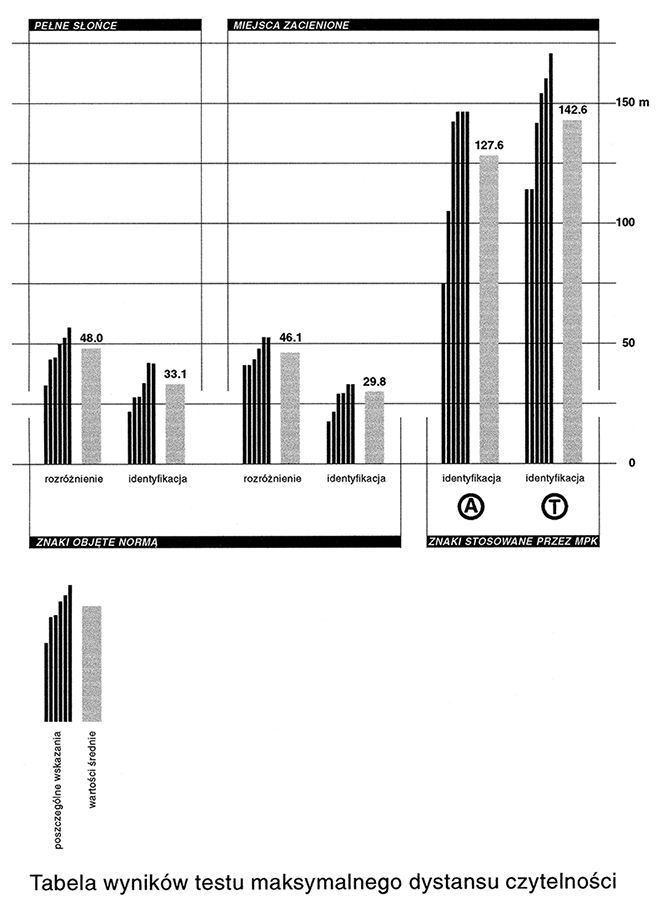
In this section, I will briefly describe the most commonly used tests. The list begins with the maximum readability distance test. This is conducted using a distance meter. It allows for the demonstration of tested objects at varying distances between the object and the test participant. It allows for determining the maximum readability distance of the tested visual message or its individual components. Typically, the actual distance from the object to the test participant is recorded.
The in-depth visual analysis test allows for the demonstration of tested objects with varying image sharpness. It is conducted using a visual scope. Image deformation, a form of haze, is achieved by placing a type of ground glass between the test object and the test participant. The ground glass position is recorded on a special scale, allowing for the reading or recognition of the tested object. The obtained results, after conversion, are expressed as percentages.
The progressive vision test involves the presentation of tested objects under varying light intensity conditions. It is conducted using a visual scope. The moment the test participant reads or identifies the presented message is recorded. Test results are presented in lux.
The tilt test involves presenting test objects at varying angles relative to the viewing axis. It is performed using a visuoangular meter. The tilt angle of the two-dimensional object being tested, which allowed for the reading of the message, is recorded. Results are presented in degrees.
The tachistoscope test. A tachistoscope is a device that allows for the demonstration of test objects at adjustable exposure times – from very short exposures of less than thousandths of a second to several or a dozen seconds. A tachistoscope is used to conduct a range of tests, including visibility and readability tests, identification tests, and spontaneous attention-grabbing tests. Properly designed tests can provide a wealth of important information about the test object. It allows for determining the time required to perceive, recognize, read, and finally identify the message or its individual elements.
Depending on the type of test, several to several dozen respondents participate in the test. However, a specific selection of test participants is not required, although certain limitations and criteria may be introduced.
Each test begins with a simulation of the most unfavorable conditions for perception, followed by a gradual improvement. The choice of test depends on the characteristics of the object being tested and the set of information the research program is intended to provide. Typically, single tests are conducted, and only in exceptional cases dictated by the importance of the problem is the test set expanded.
In practice, there are two types of testing devices, known as mechanical and projective. The difference is that mechanical devices enable the presentation of real objects, including three-dimensional ones, while projective devices use various forms of two-dimensional recording, such as slides.
Visual testing allows for maximum objectivity of all forms of visual information. The goal is to adapt the physical characteristics of a visual message or its components to the requirements of a given object – a warning sign, verbal information, a signaling device, or a control panel.
The previously cited cases are, of course, just a few of many examples that can or should be subjected to visual testing. It should be emphasized that newly developed solutions can be tested not only in their final form but also in all intermediate stages. Functioning objects, if there are any concerns about their proper performance, should also be verified. Some of the methods discussed can be applied in the initial analysis phase, thus anticipating and clarifying the definition of the design problem.
The methods and devices presented are used in the research, teaching, and design work of the team at the Department of Visual Communication, Faculty of Industrial Design, Academy of Fine Arts in Krakow. This approach to the tasks at hand supports our deep conviction that we are participating in shaping optimal, ergonomically correct conditions for human development and functioning in their visual environment.
Teaching Areas
- Designing visual communication.