Three pennies - I
Professor Jan Nuckowski

My two cents on the broad field of communication from a historical and interdisciplinary perspective.
Ludwig Wittgenstein wrote: the limits of my language determine the limits of my world.
This idea has been interpreted as follows: if I can't name something, I don't see it. Hearing this interpretation, most of us will undoubtedly scoff – how can I not see it?
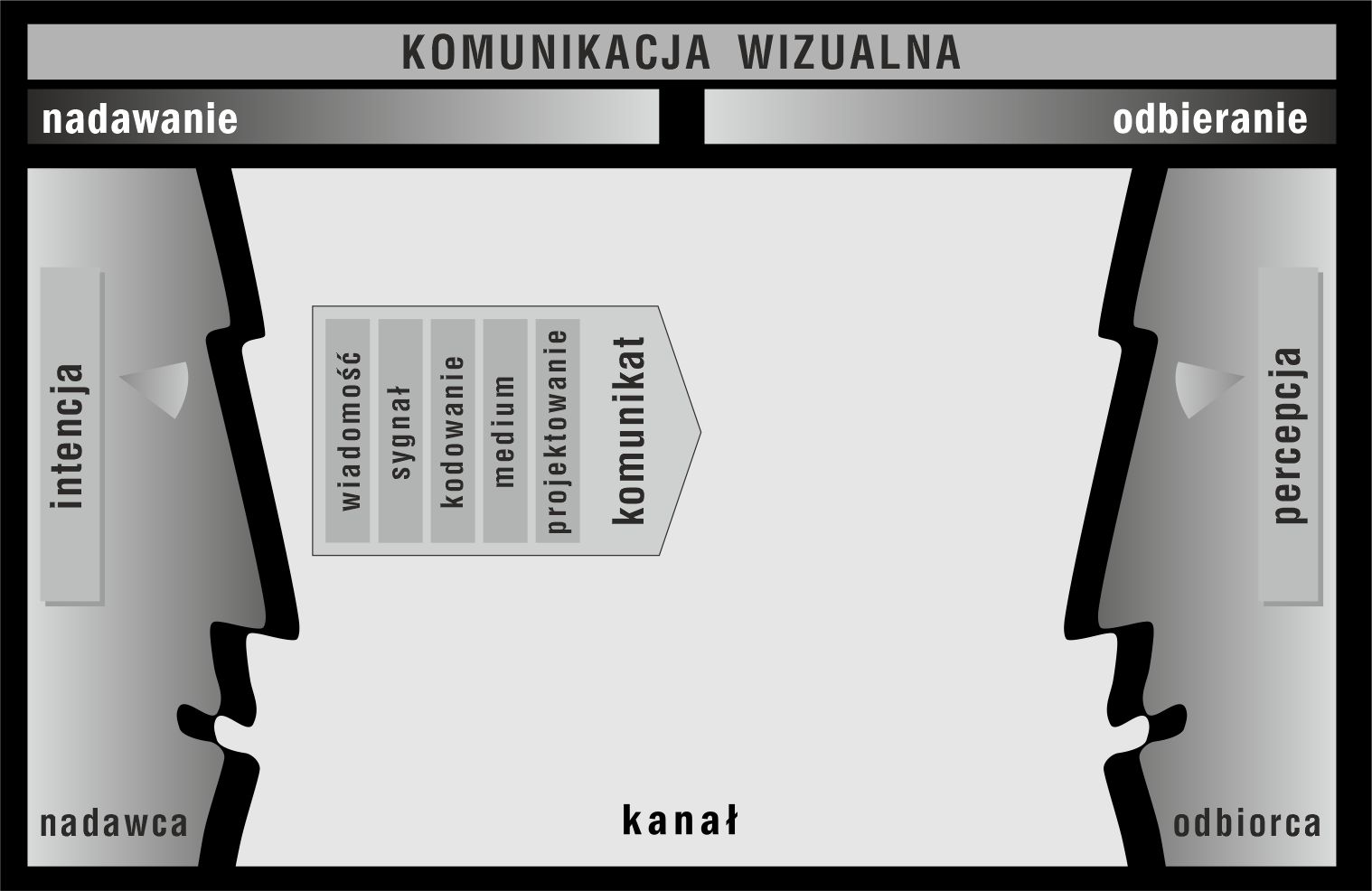
And yet. Without words, language, how to define a nameless environment. How to engage in interpersonal communication. The title of my short text is intended to emphasize that I am intervening in an area of issues very important to each of us, and in which I am more a user than a researcher. However, it so happened that I had to make at least a modest contribution to these issues, to encompass them somewhat, and to express it in a form as accessible as possible to anyone interested.
In my case, these were students of the Academy of Fine Arts, Faculty of Industrial Design. However, I will begin with a digression. Many years ago, I was asked by the organizers of the Children's University in Krakow to prepare a lecture on the topic of What is Visual Communication.
This forced me to reformulate the "language of the lecture" and adapt it for students aged 7-9. It was an incredibly enlightening experience. It also made me wonder if it was possible to explain every topic and subject matter to a nine-year-old so that they could maintain their attention during a relatively long lecture, and also in a way that they could understand it?
In any case, from that moment on, I tried to be even more careful in my presentations, even though the audience wasn't children. I feel this doesn't demean anyone, but it does compel me to be particularly precise and logical in my argument. It allows me to reach a much wider audience. My two cents here are built on this principle.
In the beginning was the word... and the word was with our ancestors. Well, not from the beginning. First, there were inarticulate, onomatopoeic sounds—groans, grunts, and cries—that gradually began to "stick" to things, plants, people, and situations. They allowed them to be described, becoming their signs. Names and words arose, gradually creating a natural language. It was certainly a long process. How long, how it matured into a form resembling the language we use today—it's impossible to precisely determine today.
These were the first steps, a stage of communication between our ancestors. Aristotle mentioned this fact when he wrote: "Man is the only creature with speech, while the voice, the organ appropriate for uttering sounds of pleasure and displeasure, is also characteristic of animals. However, animal sounds cannot be combined into syllables, nor, like human speech, be reduced to syllables."
By writing and using the terms syllables and human speech, Aristotle was already representing the second significant stage in the development of interpersonal communication—a creature using the ability to record speech. More on this in Part II.