Three pennies - II
Professor Jan Nuckowski
The long history of this method of recording thought and knowledge spanned centuries and, interestingly, was not limited to a single place or region of the globe. From pictographic writing, through ideographic and other concepts, came phonetic writing, in which speech sounds were assigned specific symbols. This led to the development of an alphabet that proved to be the easiest to use. Time has shown that the Latin alphabet and the associated Latin culture—Latin civilization—proved to be one of the most powerful on our planet.
This paragraph is a cross-country run through the history of one of the most important aspects of human civilization. Of course, readers have the right to seriously criticize me for omitting many stages and fascinating moments in this process, especially in the section concerning the search for writing. However, this text is not an introduction to a hefty book, as a complete account of those centuries would require.
Personally, I am less interested in the "technical" aspects of communication than in its deeper meaning, message, and understanding the mechanism of this process. How to achieve this, and by what techniques, is secondary to me, although it would be imprudent to ignore it.
Since everything begins with a word, a name, I would start with etymology. "Communication" derives (didn't I mention it?) from the Latin "communicatio" and means connection and, or conversation. Interestingly, "communicatio" in turn derives from "communicare" – to share, to make common.
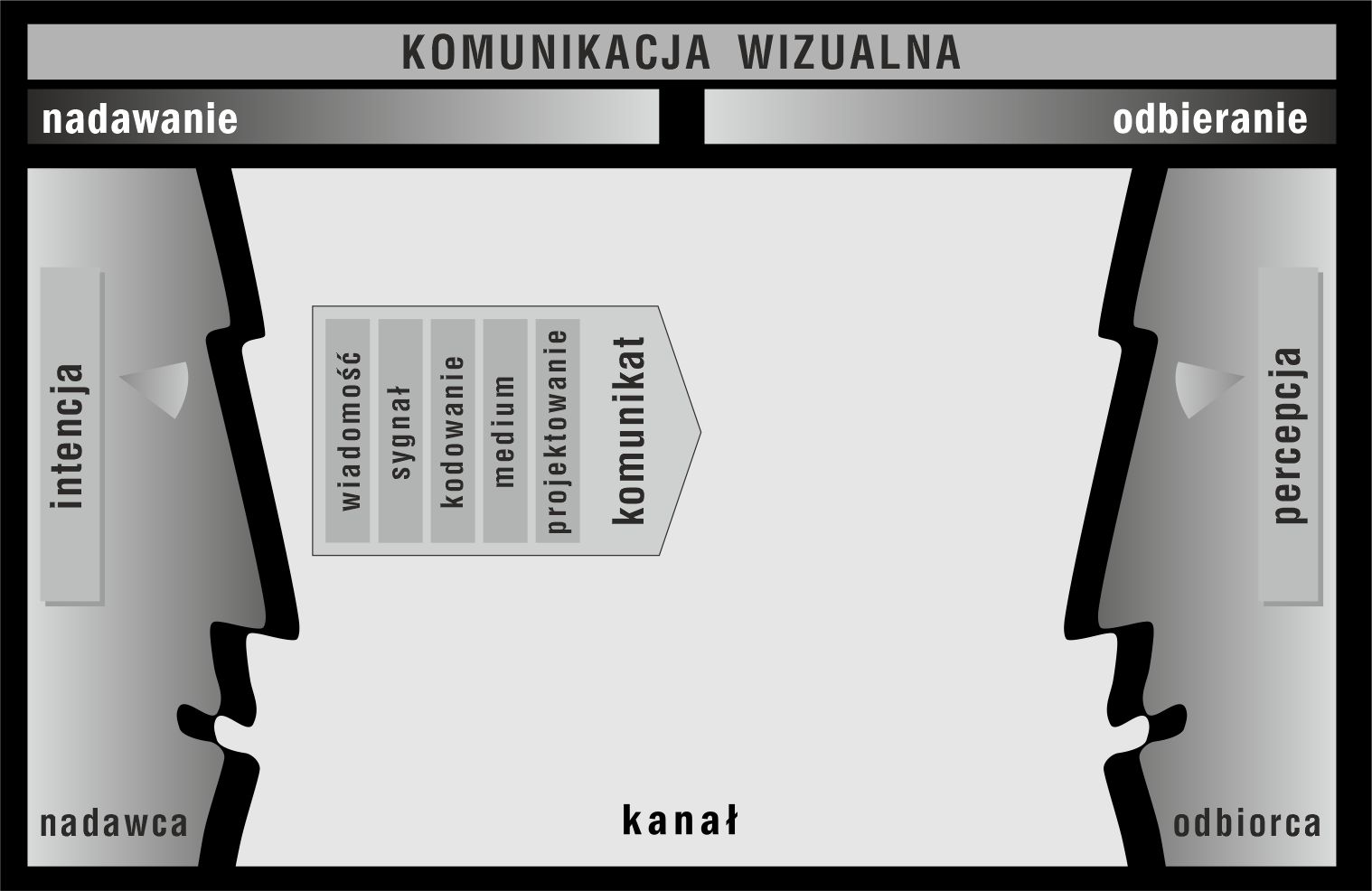
In my opinion, this "sharing" is beautiful in itself. After all, to share, you have to have something. I have something that I intend to share. In interpersonal communication, the sender possesses knowledge that they wish to convey to someone who will become the recipient. I have mentioned two extreme, yet also the most important, elements that make up the framework of interpersonal communication. The process between the sender and the recipient is complex, composed of many elements, and it is impossible to explain everything precisely in this necessarily short text. It's important to mention information encoding, or its proper preparation so that the recipient can understand it, that is, decode it. I used the term "information" because it is the essence of communication – "I have information for you and I intend to, I want to convey it to you. It is my will to do this, and I will do everything to convey it." This aforementioned act of will is, in my opinion, very important.
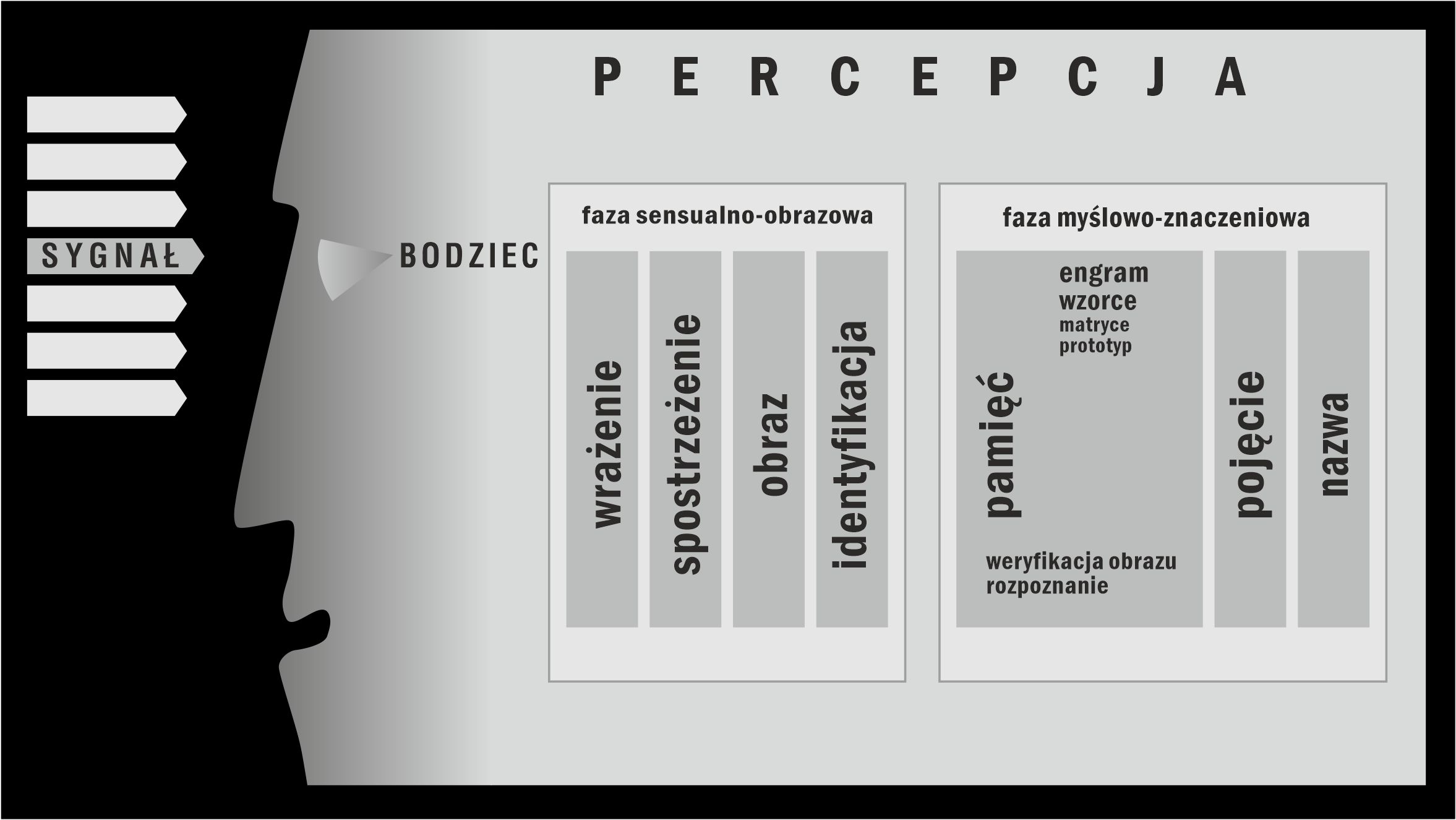
In the process of visual communication, which is supposedly properly prepared – addressed to the visual receptor – a situation arises where the will of the sender plays a key role. Visual communication is an incredibly "sensitive" process, in which unforeseen, subtle components of the message can significantly deform it. My, the sender's, careless gestures and decisions can be perceived as specific signs that, in fact, have nothing to do with the main message, yet they can deform it or even completely destroy it. As a side note, I should mention that some studies hypothesize that visual communication accounts for almost 90% of all information we receive.
Signs are the condicio sine qua non of visual communication. Semiology, whose origins date back to the turn of the 20th century, studies signs. This may seem strange, but semantics has yet to arrive at a single, definitive definition of this concept. The problem of signs is so complex, so multifaceted, that it's impossible. One of them sounds almost like a pun – "a sign is something that stands for something else, something that cannot be here and at this moment." For example, a road sign – "caution, sharp left turn" – stands in for this turn and anticipates it, allowing us to slow down and navigate it safely.
The essence of signs is that we constitute them. Our ancestors glued the sounds they made to objects, thus turning them into signs, auditory signs. Of course, in this sense, they didn't know that they were laying the foundations of semiology. Personally, I'm convinced by Mieczysław Wallis's definition: "...*one can provisionally define a sign as an object perceived through the senses, created or used by a sender so that, thanks to certain of its properties, it evokes in a recipient a thought—an image, concept, judgment, or some combination thereof—about an object other than itself." Another definition, by the eminent philosopher, mathematician, and artist Leon Chwistek, should also be mentioned: "...*any thing can be considered a sign, and no thing is a sign in itself. Everything depends on an agreement made in advance." The aforementioned will emerges, the will to participate in the agreement—I use something as a sign of something else, I make an object a vehicle for a specific meaning, information.
Here, I will allow myself a digression. Let's consider how many "agreements" we enter into and adhere to without actually being aware of the moment of their conclusion.
Further in Part III