visual communication
Professor Jan Nuckowski
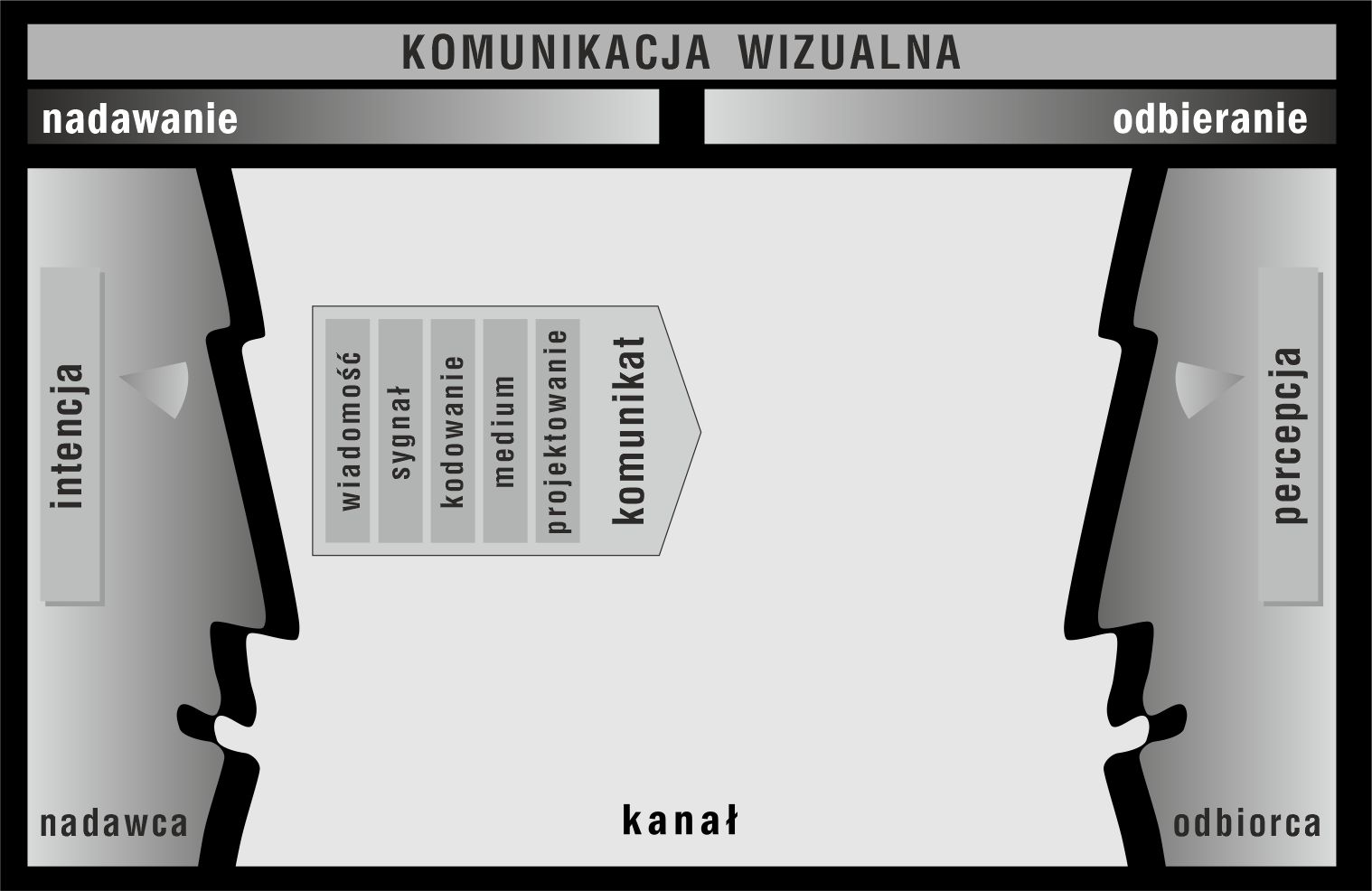
Reality is changing at an accelerating pace. It would be foolish to assume that our own agricultural plot is exempt from this. Therefore, it's worth periodically returning to the first questions—those asked by children: what is visual communication?
From the moment we are born until the end of our days, as soon as we open our eyes, survey our surroundings, and perceive a multitude of objects and processes. They are innumerable. Which of them, and why, become the first element in the entire chain that constitutes the process leading to the expansion of our knowledge? Which ones trigger our particular reaction? Which of these processes constitute what I would call communication? Which ones don't deserve the name? Why not?
I make a gesture with the intention that someone will read a specific message into it. I did it consciously, deliberately, not by accident. This gesture conveys a certain message. This message is, in essence, a thought formulated in the intention to transmit—it initiates it. An act of will—the intention to transmit—is the sine qua non of communication.
At this point, it's worth recalling that the word communication comes from the Latin communicare – to share, to participate, to convey. Etymologically, it means entering into a community and exchanging ideas – implicitly with another person.
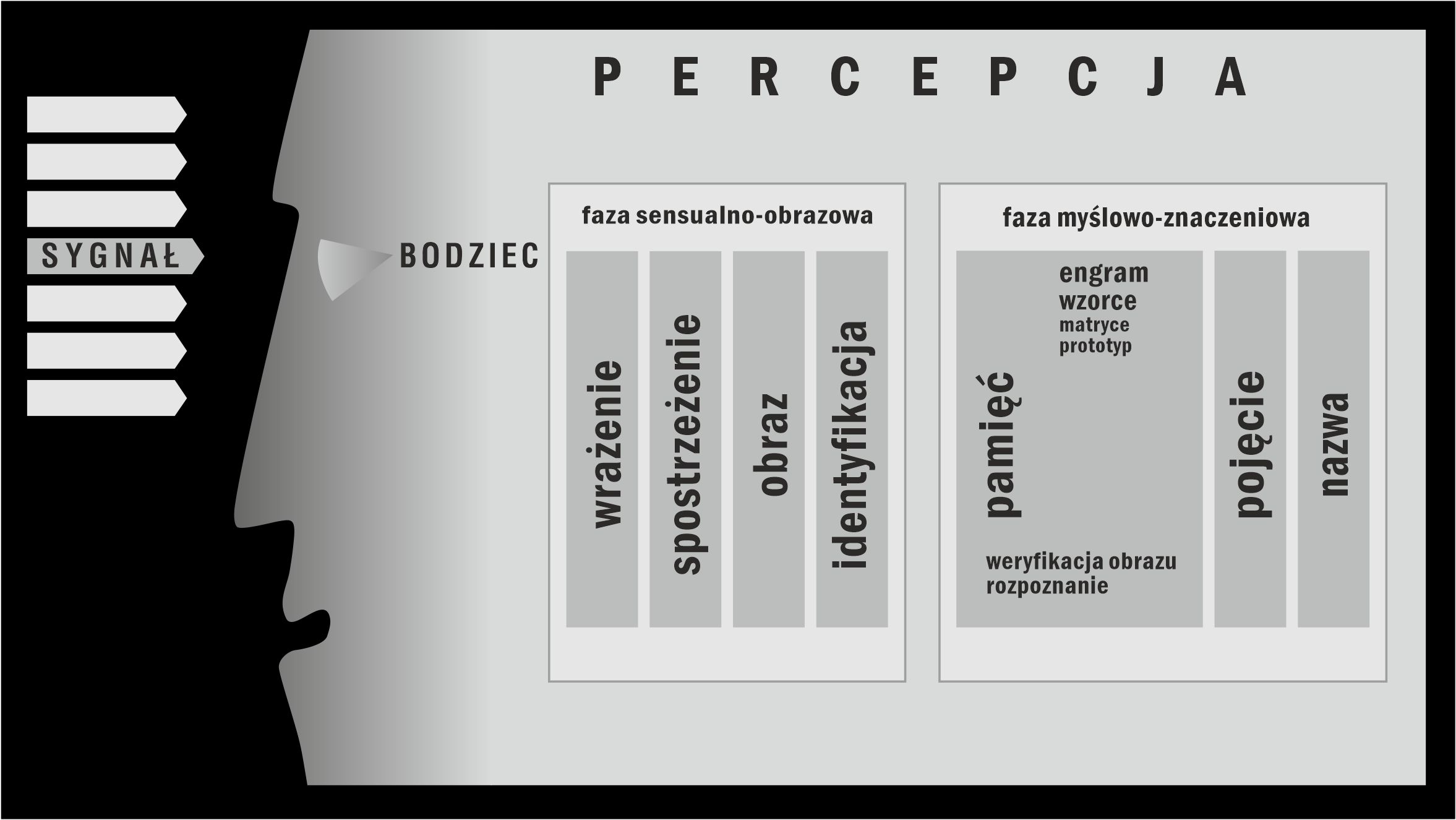
My gesture is also a signal, an energetic state that can stimulate the recipient's visual receptor. I have become a sender, sending a signal through a channel. A channel is the space separating the sender from the recipient – this is a feature of all types of communication. At the "other end" of the channel, my signal-message is interpreted by the recipient as a message with specific content.
An extremely important feature of the sequence of actions and process discussed here is the specific community of the sender and the recipient – the community of applied conventions. Because we grew up in a Mediterranean culture, we use the Latin alphabet. In turn, the specific arrangement of letters that compose the words of a given language allows all speakers of that language to read this text. This principle is a kind of agreement between the sender and the recipient, of which we are generally unaware, but which nevertheless enables communication. We enter into this agreement when learning to read and write. Using the elements of this agreement is called code, and coding is the selection of signals and methods of transmission. Giving signals a material structure (medium) is an action that, in certain specific circumstances, can be called design. As a result of design, messages are created. At this point, the first stage of communication – transmitting – ends.
I mentioned the importance of the intention to send, to initiate the communication process. A similar attitude must be present on the part of the recipient: a desire, need, or other motivation to receive, to decipher the incoming messages. A full communication act can be considered when contact is established between the sender of the message and its recipient. In this case, not only the sending phase but also the reception phase occurs. In such a situation, the message is reproduced and the communication is fulfilled.
I believe that without a recipient who performs the act of communication, there can be no communication.
So far, I haven't mentioned the second part of the concept of visual communication. However, I feel that it shouldn't raise any particular doubts. Visual – relating to the sense of sight. Visual communication – communication that occurs through the eyes.
The process described – visual communication – is unidirectional – one person is the sender, another the recipient. However, as social beings, we also satisfy our needs through mutual understanding – communication. In such a situation, we speak of interpersonal communication. The recipient becomes the sender, and so on. This is how I understood and explained visual communication for teaching purposes at the Department of Visual Communication, feeling myself to be its proponent. I emphasized the humanistic nature of this understanding of visual communication. I also emphasized the intentions of the sender and recipient. I disagreed with other understandings of this process.
And when you work on a computer, it responds to you, that is, it communicates with you! No! If I turn the handle of a numerical calculator and obtain the desired result, it doesn't mean the numerical calculator wanted to communicate with me. It's similar with a computer. A computer doesn't do what it does because it has specific intentions. It simply "calculates" and gives me the result of that calculation based on some algorithm. Until "today," I believed that I communicated, exchanged thoughts, informed, announced, explained, etc., exclusively with other homo sapiens.
However, I'm slowly beginning to doubt whether we might be developing some kind of apparatus sapiens.
Will this AS, having "his own" thoughts and intending to share them, seek some way to communicate them to me on his own initiative?